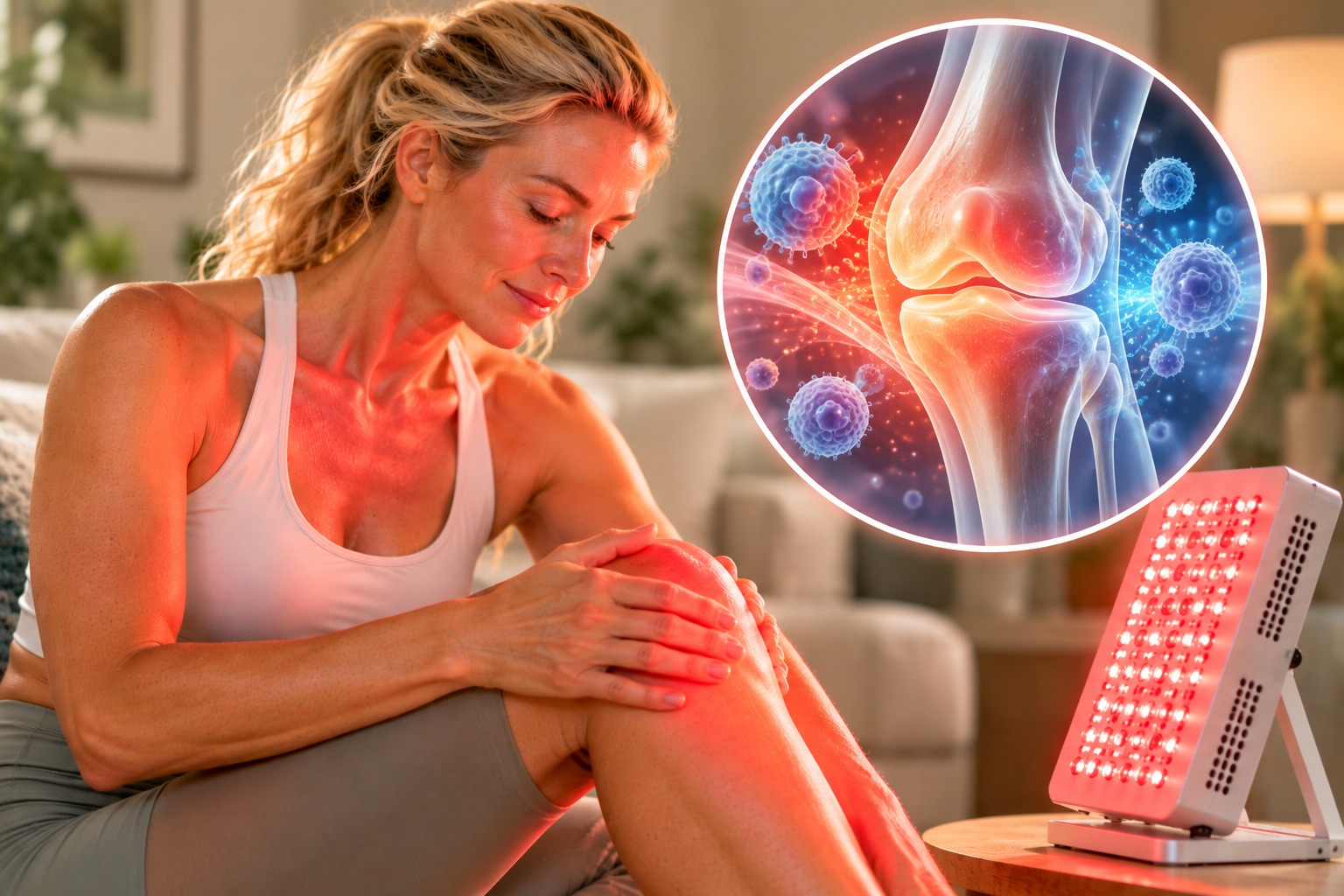
Red light at home. A great place to start
Red and near-infrared light offer an easy way to introduce photobiomodulation into your everyday routine.
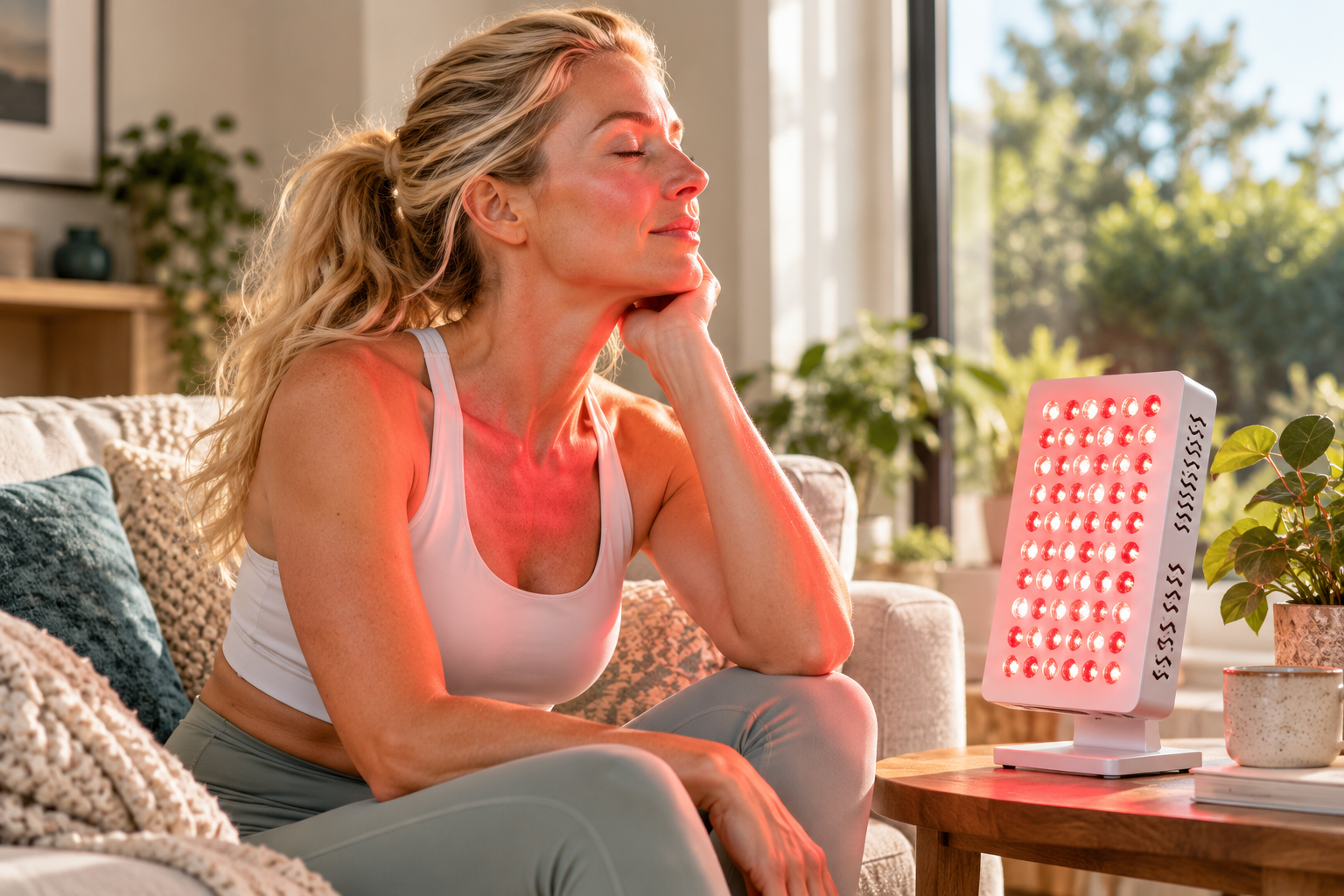
Sit, relax and let the light do the work. Our compact multi-wavelength panel combines six wavelengths for broad-area exposure — from skin and surface tissues to deeper structures.
Simple. Non-invasive. No complicated routine.
Cellular repair
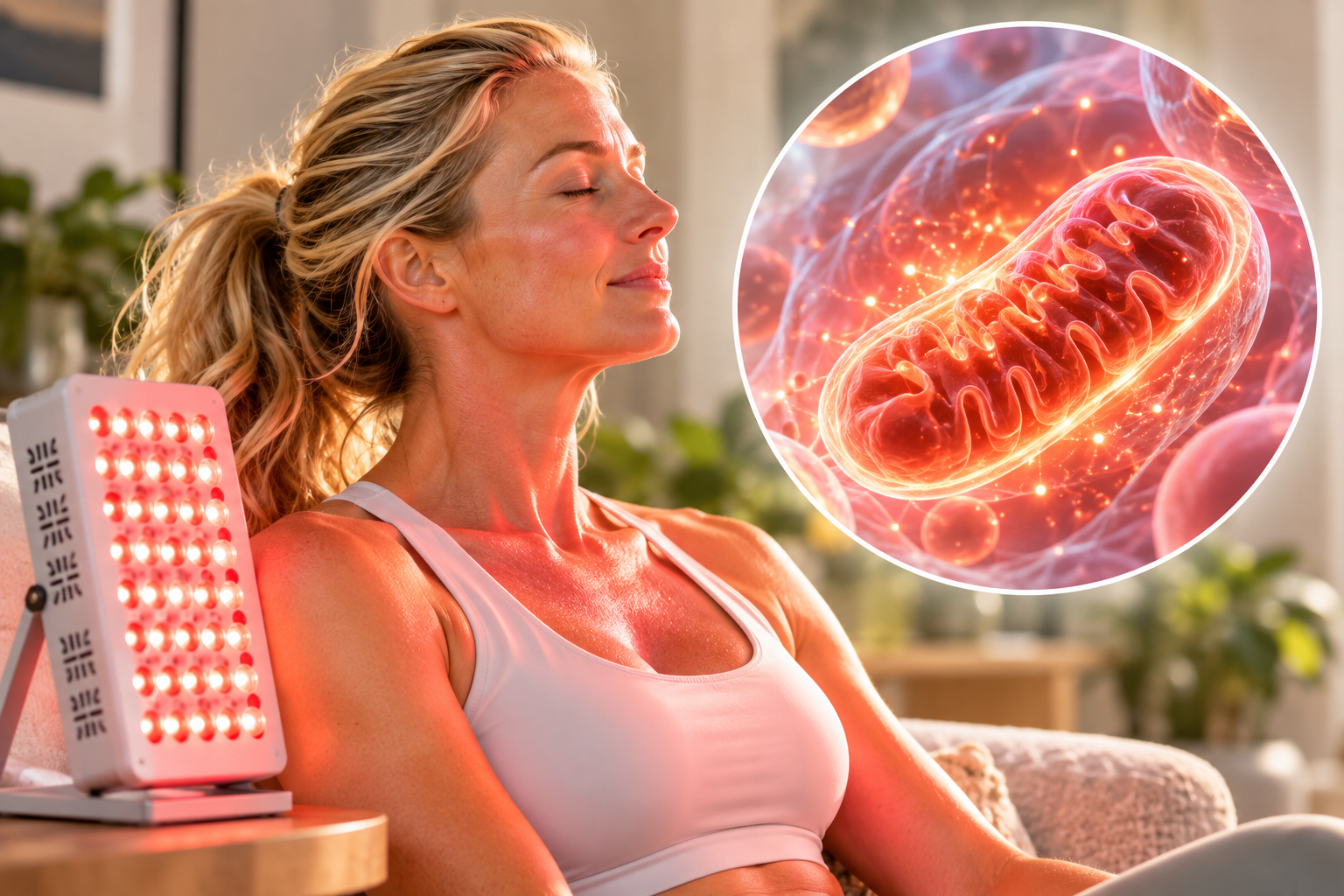
Your cells need energy to maintain and repair themselves.
Red and near-infrared light can interact with mitochondria — the structures within our cells responsible for much of their energy production.
Photobiomodulation can influence mitochondrial activity and cellular signalling, helping support the body’s normal processes of maintenance, repair and recovery.
Think of it as supporting the cell where recovery begins.
Collagen production
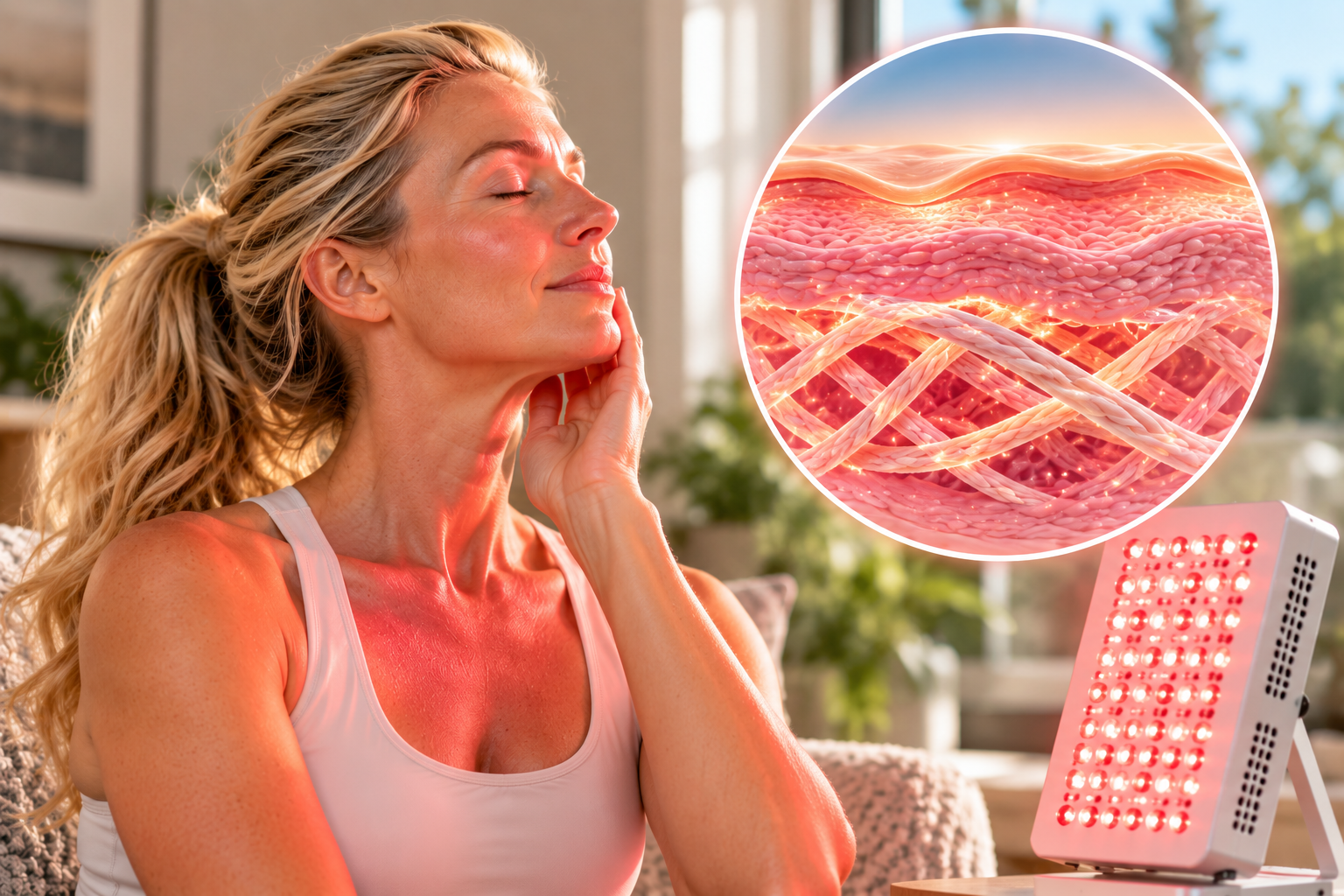
Collagen gives structure and strength to your skin, tendons and connective tissues.
Red and near-infrared light can influence fibroblasts — the cells responsible for producing and organising collagen.
That makes photobiomodulation particularly interesting for both skin health and tissue recovery, where collagen formation and remodelling are important.
Supporting the structures that help hold us together.
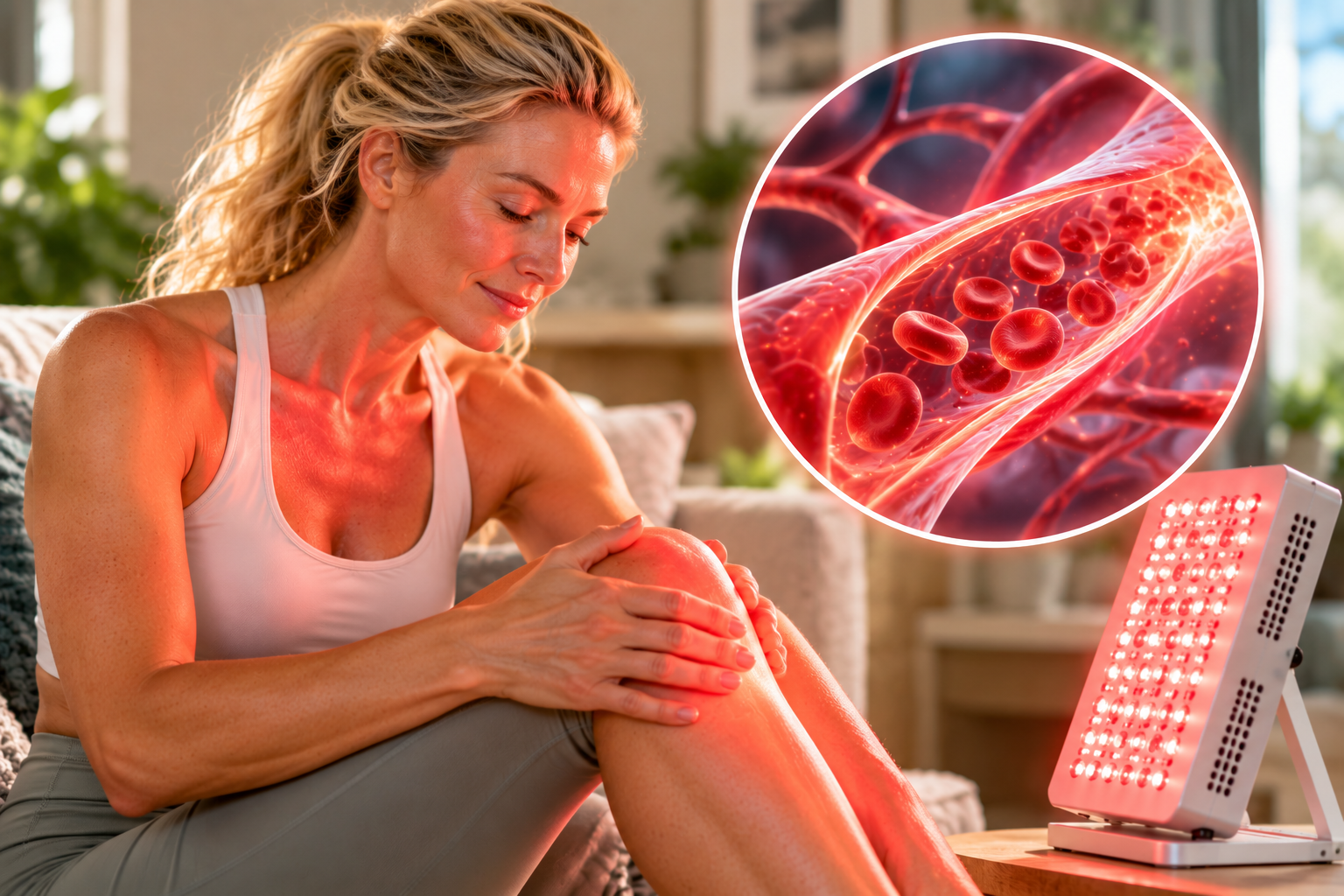
Local circulation
Healthy circulation helps deliver the oxygen and nutrients tissues need for normal function, maintenance and recovery.
Red and near-infrared light can influence nitric oxide signalling and local blood flow, which may temporarily increase circulation in the exposed area.
That makes circulation another part of the wider photobiomodulation story — supporting the environment in which cells and tissues do their work.
Helping keep things moving — right down to the cellular level.
Healthy inflammatory response
Inflammation is a normal and necessary part of repair. The problem is when the inflammatory response persists longer than it needs to.
Research suggests photobiomodulation can influence inflammatory signalling and cellular processes involved in the body’s response to tissue stress and injury.
Rather than simply blocking inflammation, red and near-infrared light may help support the body’s natural progression from inflammation towards resolution and recovery.
Supporting recovery — not simply masking the response.